Pages

30 September 2011

Day 32: No Whistling in the Kitchen

Culinary history feels like a loose collection of urban legends that have been around long enough to become apocryphal half-truths. For example, our textbook says the folds in a chef's hat were "said to represent the number of ways a chef can prepare an egg." It's the kind of phrasing people use to absolve themselves from the fact that they have no idea who said it. If I'd read that on Wikipedia, I'd immediately add [citation needed].

But hey, urban legends can be fun. Our chef-instructor regaled us today with the origin of the No Whistling rule. Among unwritten rules of human behavior, it's several notches above friending your parents on Facebook or hitting on 17 and you're in the first position at the table. In other words, really bad. A reason to get fired. At least if you're in a proper French kitchen.

So the story goes, there was a hellacious French chef who would physically abuse his cooks. It got so bad that the cooks began to plot his overthrow, maybe call in an Italian cook who knew a guy who was the best at these kind of things and bada-bing, fuggedaboutit. (I'm embellishing. Look, that's what you do with these things.)
Chef Léon sets up his station, if you know what I mean.
Anyway, the go code to eliminate the chef was whistling a particular tune. Oh, let's say, La Marseillaise. But, unfortunately for our hapless, put-upon cooks, the devious Chef Bad Guy uncovers the dastardly plot and, when the first cooks begin whistling, they are summarily fired.

To this day (as any proper urban legend will conclude), whistling in the presence of a French chef will get you canned immediately. Which apparently, is kinda sorta true. At which point you return home and try to learn yet another method for cooking an egg.

In actual, practical culinary lessons we learned today was this little nugget: serve warm food on a warm plate. Serve cold food on a cold plate.

No origin story there. It makes sense.

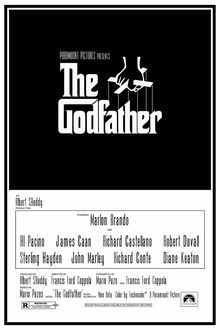
Food in Fiction: The Godfather

"Hey, come over here, kid, learn something. You never know, you might have to cook for twenty guys someday. You see, you start out with a little bit of oil. Then you fry some garlic. Then you throw in some tomatoes, tomato paste, you fry it, you make sure it doesn't stick. You get it to a boil, you shove in all your sausage and your meatballs. Add a little bit of wine. And a little bit of sugar, and that's my trick."

Clemenza (Richard Castellano)
written by Mario Puzo and Francis Ford Coppola, based on Puzo's book
directed by Francis Ford Coppola

26 September 2011

Week in Review #5 + #6: Callousness

I've been pretty much hunkered down studying/practicing for the last two weeks, which is why I didn't get a Week in Review out last week. When I first enrolled, I wasn't sure how much traditional studying, report writing, and test taking there would be. For the first six-week session, I'd say it's very much like any other educational program, complete with a marathon finals week full of exams and reports.

Another reason for no Week in Review was because Culinary Foundations I was, as the name implies, basics. The early going was the culinary equivalent of grammar lessons. Not the most exciting thing, but it's what everything else is based on: knife cuts, kitchen nomenclature, cooking techniques, stocks and sauces.

I'm happy to report that practice doesn't make perfect, but did help me score well on my knife practical final. And, more importantly for me, it's helped me develop a chef's callous.

The base of my right index finger, where the top of the blade and knife handle meets my hand, has gradually toughened up over the course of the class. It's the same area that tore open during my volunteer stint months ago, and it makes me feel like I've officially passed through some medieval ritual and emerged a member of a secret society of vegetable-chopping superheroes. Like Watchmen, but with uniformly cut carrots and fresh mayonnaise.

Culinary Foundations II starts today, which alternates demonstration/preparations and cooking days. In other words: cooking! Huzzah!

23 September 2011

Day 29: Basic Presentation

It was fitting that our last day of Culinary Foundations 1 featured a basic lesson in plating, or as the French say, le cuisson fancy dancy. It was the first time and, probably, the last time the term "negative space" will be used during my cooking education.

Obviously, this isn't something one normally does at home. However, presentation was my first recognition that there was more to food than cooking and eating, and I've always been fascinated by how TV chefs drizzle a little sauce here and stack a little there and come up with a visual that equals anything you'll find in a modern art museum. Better, in fact, because you can A) take a picture of it, and B) eat it. Everybody wins.

Our chef-instructor demonstrated four plating styles using the same ingredients: chicken, carrots, red and green bell peppers, couscous, reduced chicken stock, and basil to garnish.

Traditional plating
Basically, the entre at 6 o'clock, starch and vegetables at 10 and 2, the sauce over the entre, and garnish really tying the room together. If the clock metaphor looks wrong in the picture, that's because I took it from the side.

Nouvelle plating 
Circa 1960-70s. The sauce goes down first, with the other ingredients "floated" over. Entre goes over the starch in dead center, with the vegetables and garnish artfully splayed out around the circumference of the plate.

Stacked plating
Apparently, three things reached meteoric heights in the 1990s: gangster rap, alternative rock, and food on plates. The entre goes over a mound of starch with the vegetables arranged to give the appearance of structure and height. Sauce is drizzled artfully and the garnish is placed similarly to how skyscraper architects would place an antenna atop their buildings just to nab a new world record. I'm looking at you, Willis (née Sears) Tower.

Displacement plating
Displacement is our chef-instructor's term. I think These Ingredients Don't Like to Share plating also works. Here, the entre takes up the center, and every other ingredient takes their ball and goes to their room. Also, square plate!

Food in Fiction: "Birthday Cake"

"Extra sugar, extra salt
Extra oil and MSG
Extra sugar, extra salt
Extra oil and MSG

Shut up and eat!
Too bad, no bon appetit!
Shut up and eat!
You know my love is sweet!"

"Birthday Cake"
by Cibo Matto
from the album Viva La Woman! (2006)


"Cibo matto" means "crazy food" in Italian. Viva La Woman! consists entirely of songs about food.