Pages

Showing posts with label italian food. Show all posts

09 December 2011

Food in Fiction: Home Alone


Kevin (Macaulay Culkin), Pizza Boy(Dan Charles Zukoski), Johnny the Gangster (Ralph Foody)
Home Alone (1990)
Written by John Hughes
Directed by Chris Colombus

27 October 2011

Recipe: Risotto Milanese

Apparently, a lot of saffron used to come through Milan, owing to the fact that the city is in a geographical sweet spot connecting Italy to the rest of Europe.

Some fun facts about saffron:
  1. A saffron thread is a stigma from a flower of the saffron crocus plant. Each flower contains three.
  2. One pound of saffron is roughly the equivalent of 75,000 flowers.
  3. Due to the fact that it's handpicked, and from aforementioned fun facts one and two, it's the most expensive spice in the world. Perhaps, also because...
  4. Today, most of the world's saffron comes from Iran.
  5. It's the defining ingredient of paella. It also makes for a fine risotto.

Ingredients
  • 1/2 cup short-grain rice (arborio is widely available)
  • 1/4 onion, finely minced
  • 1/2 cup white wine
  • 3 cups chicken stock
  • 5-7 saffron threads
  • 1/3 cup shredded parmesan
  • 1/4 cup (half a stick) cold butter, in chunks

Equipment
  • medium sauce pot
  • small sauce pot


Prepping

Warm the chicken stock in a small sauce pot until steaming. Add the saffron.

Finely mince the onion. The onion bits shouldn't be any larger than a grain of rice.

Cooking

Use the risotto method, of course!

Heat a tablespoon or two of olive oil (and a pat of butter if you want) in the medium sauce pot. Sweat the onions for a few minutes, just until they start to get a little color. Add the rice and toss to coat in the oil/butter. Toast the rice for a minute or two.

Add the white wine and reduce until almost dry.

Add the stock 1/4-1/3 cup at a time and stir. Wait until the rice absorbs most of the liquid before adding more. It shouldn't be too dry before you add more, but it shouldn't be soupy, either.

Test a grain of rice as you get towards the end of the stock. Liquid should be absorbed all the way through, but you still want some bite. You know, the whole al dente thing.

When you're getting close, add a pinch or three of salt and stir in the butter and a little cheese. The cheese will thicken it up, so add a little more stock if necessary. It shouldn't pile up when you spoon it onto a plate. The word we used in class was "wavy." Go wavy.

Serve with more cheese. Sprinkle some minced parsley if you want to take a picture of it.

26 October 2011

Day 49: The Risotto Method

From stocks to soups to sides and now, finally, a solid food dish that could conceivably be a meal all by itself, risotto.

I don't remember the first time I learned about risotto, but I do remember thinking, "Wait, it's just rice?" Oh, the folly of youth. Because A) I can and have eaten rice for consecutive decades, and B) it's really, really tasty rice. Creamy and nutty and luscious and all that.

And it's customizable! Since Le Cordon Bleu is all about techniques over recipes, and risotto is a technique, our chef-instructor taught us the basic risotto method – in Italian, no less – with which one could easily make their own plate of creamy rice deliciousness. As my favorite Italian, a super plumber named Mario, would say, "Let's-a go!"

The Risotto Method
  1. Soffrito* - Saute aromatics. The word means suffer, so imagine onions weeping out their moisture.
  2. Riso - Add the rice. Coat it in the fat the aromatics are currently sauteing in and let toast a little.
  3. Vino - Wine, to deglaze the pan and add a wee bit of flavor. Cook until almost dry.
  4. Brodo - Broth. The liquid should be hot so as not to stop the rice's cooking process. Adding a little at a time promotes more even cooking.
  5. Condimenti - Butter and cheese and salt. And, if you're feeling sexy, vegetables and cooked meats or seafood.
*Not to be mistaken with the Spanish sofrito, although the basic idea is the same. This is the flavor base.

The condiment step is an obvious spot for getting creative, but really every step of the way can be switched up somehow. Different stocks/broths, wines, etc.

As for the rice, starchy short-grain varieties work best. Our chef-instructor recommended three: arborio, carnaroli, and vialone nano. I've read more than handful of recipes recommending bomba. I've actually made half-decent risotto using calrose, but that should probably be a too-lazy-to-go-to-the-store last resort.

19 October 2011

Cored, Scored, & Chopped

The tips of my fingers are still sore. It's that weird hypersensitive numbness, when putting pressure hurts, yet brings a strange relief at the same time. I also have scabs underneath my fingernails, which is not something that's ever happened to me before.

I volunteered at a DineLA event last Friday, my first real professional experience as someone who knows both how to pronounce and actually do a brunoise. The event featured some real heavy hitting chefs – I almost plowed an ice cart into Sang Yoon – that I ogled from afar but didn't interact with. Le Cordon Bleu student volunteers were divvied up among the various chefs at the Montage Hotel in Beverly Hills, and I ended up in the kitchen at Scarpetta, which might be the most beautiful kitchen I've ever seen. Expansive, organized, and just plain pretty. My stuck-in-a-corner phone camera photo doesn't do it justice...
...although the JJ Abrams-esque lens flare does provide some whimsy, no?

My first task was coring and scoring tomatoes, then blanching and peeling them. Of course I cut my thumb and middle finger inside of ten minutes trying to quickly slice the 'X' into each tomato. And then I didn't blanch them long enough. And on top of that, some of them were slightly underripe, which meant no amount of blanching short of full on destruction was going to loosen the skins. So, for about three hours, I was clawing at tomato skins, hence the scabs in places where I didn't think you could get scabs.

The prolonged, single task did give me the opportunity to observe the general flow of things. Scarpetta executive chef Scott Conant – yes, the Chopped guy! – was in the house. At one point he walked by as I was blanching tomatoes, pointed at them, and walked on. I'd like to think this was the Finger Point of Approval, but I figured he was checking a mental checklist.

The running gag of the event was the various line cooks asking me "So, how long are you here?" We were told we'd work until dismissed, which is what I told them, which they thought was hilarious in a you're-never-going-home-sucker kind of way.

Which was fine by me. I eventually moved on to other tasks and even got to sample some really fantastic food. A fried cheese appetizer on a bed of cherry tomatoes – I halved some of those, thank you very much – and a cavatelli pasta with braised and smoked chicken, mushrooms, and green beans. 
My general takeaway from the experience is that I'm still not fast enough in the kitchen. One of the cooks told me it comes with time, and watching them, I can tell it's as much about efficiency as quick movement. For example, cutting around the base of tomato isn't nearly as fast as a sharp stab and twist with the knife.

Not cutting yourself and having to deal with constant bandaid changes will also speed things along.

30 September 2011

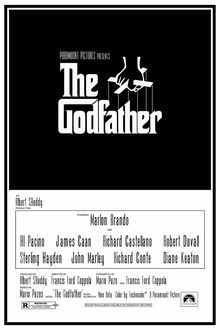
Food in Fiction: The Godfather

"Hey, come over here, kid, learn something. You never know, you might have to cook for twenty guys someday. You see, you start out with a little bit of oil. Then you fry some garlic. Then you throw in some tomatoes, tomato paste, you fry it, you make sure it doesn't stick. You get it to a boil, you shove in all your sausage and your meatballs. Add a little bit of wine. And a little bit of sugar, and that's my trick."

Clemenza (Richard Castellano)
written by Mario Puzo and Francis Ford Coppola, based on Puzo's book
directed by Francis Ford Coppola

26 August 2011

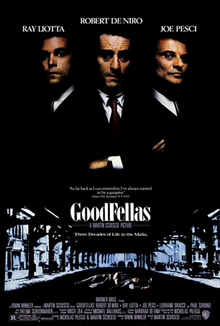
Food in Fiction: Goodfellas

"In prison, dinner was always a big thing. We had a pasta course and then we had a meat or a fish. Paulie did the prep work. He was doing a year for contempt and he had this wonderful system for doing the garlic. He used a razor and he used to slice it so thin that it used to liquify in the pan with just a little oil. It's a very good system."

Henry Hill (Ray Liotta)
Screenplay by Nicholas Pileggi & Martin Scorsese, based on Pileggi's book Wiseguy
Directed by Martin Scorsese

Paulie's thin slicing technique is properly called émincer.

Watch the dinner scene on YouTube (sadly, not embeddable)